The water’s green, you’re likely to get cold, and don’t forget a torch, from the outside scuba diving in the UK might not look particularly appealing. Throw in poor visibility and some rough weather, and it might seem like a better idea to just wait for your next holiday to go diving. However, with its unique challenges and satisfying rewards, scuba diving in the UK shouldn’t be ignored.
Maybe you’ve breezed through your Open Water course in the clear waters of the tropics and want to continue your underwater adventures or even start them from scratch. The UK has some of the most exciting, interesting, and rewarding diving anywhere in the world.
So I want to bust some misconceptions and show you why you should start diving in the UK.
Marine Life
It’s hard to get a true appreciation of how vibrant UK marine life is from pictures. The greener water and reduced visibility just don’t lend themselves well to photographs. You need to get in the water and experience it. Once you get past the lower visibility (a mental barrier for some), there’s a huge variety and quantity of marine life: cuttlefish, octopus, anemones, sharks, and schooling fish. It puts many more “attractive” destinations to shame.


The UK also has some marquee wildlife encounters available to both snorkellers and divers. You can swim with blue sharks off Cornwall, basking sharks off Scotland, and dive with seals at Lundy.
Wrecks
It’s hard to overemphasise the quantity of wrecks that litter the seas around the UK. I can’t think of anywhere else in the world that comes close in terms of number, variety, and historical importance.
The range is staggering: freighters, liners, battleships, submarines, and even tanks. What makes the wrecks around the UK particularly interesting is that the majority were lost during wartime, so they often have fascinating human stories behind their sinking.

These wrecks are exciting to explore in their own right, but they’re also magnets for marine life. The piles of twisted metal are fantastic hiding places for conger eels, lobsters, and shoals of fish.
Wherever you choose to go diving in the UK you’re likely to an excellent wreck available to explore.
UK Dive Culture
Diving in the UK has its own character. It’s very much DIY, so you have to be prepared to get stuck in. When you pay to dive abroad, you can expect a certain level of service: help carrying your kit, a professional dive guide to lead you, and, if you’re lucky, someone to wash your gear. This isn’t how diving works in the UK.
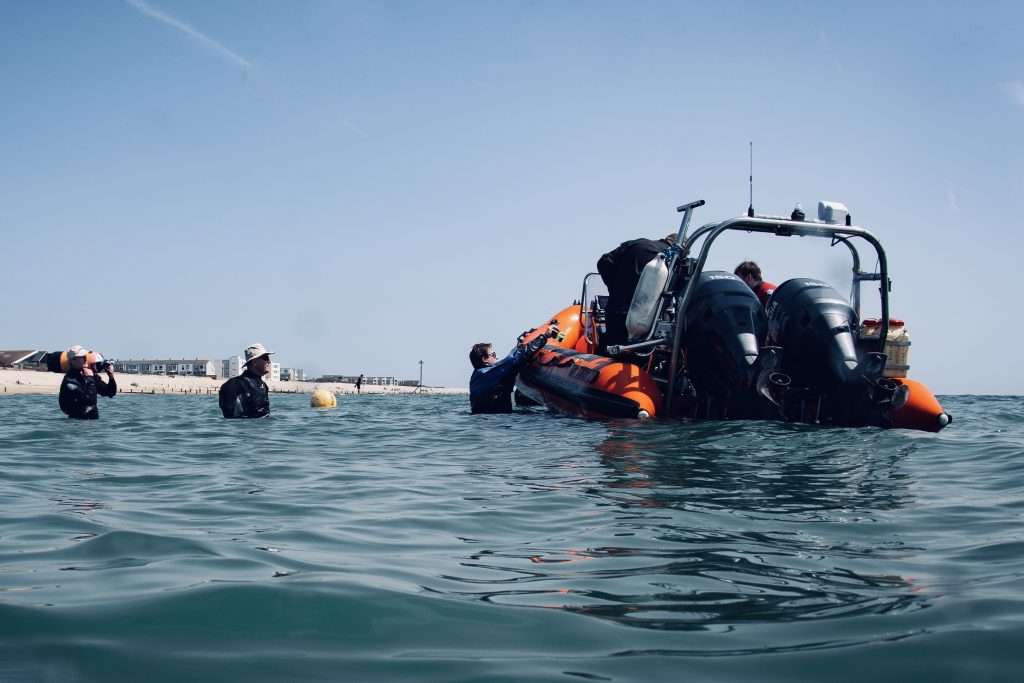
One of the most enjoyable aspects of diving in the UK is that it’s normally unguided. This may sound daunting, but once you’ve developed your skills and can navigate safely, it becomes the most rewarding way to dive. You and your buddy aren’t restricted to following a set path over the course of a dive, you can truly explore.
What this all means is that you’re in charge.
Skills
Diving in the UK will make you a better diver. Remember: if you can dive in the UK, you can pretty much dive anywhere.
When you break it down, there’s nothing dramatically different about diving in the UK. You’ll require some extra kit (to stay warm) and a few key skills that you may not have covered if you learned abroad — but you will if you train in the UK.
The real key to mastering diving in the UK is understanding and accounting for the conditions.
How to Start
There are two main options if you want to learn to dive in the UK: through a dive centre or via the club system of BSAC (British Sub-Aqua Club). Each has its own pros and cons.
BSAC training is provided by each club’s qualified instructors, more or less free of charge — all that’s required is a monthly membership fee. It’s a great way to involve yourself in your local dive community and find others to dive with. It’s also the most affordable way to learn. The main downside is that it takes significantly longer, as training is delivered over weeks rather than days.
If you go down the route of a dive centre affiliated with a professional agency (like PADI, SSI, or RAID), you can expect the training to take only a couple of days and to be delivered in a more customer-focused manner.
If you want to continue your diving in the UK, I’d strongly recommend joining a club. They’re an invaluable source of information and, crucially, provide a larger pool of divers to dive with. As with training, you’ll find clubs affiliated with both dive centres and BSAC.
I eventually joined a BSAC club and found the experience generally positive: Joining the BSAC 1 Year On
Where to Go
Swanage (Dorset)

Tucked away from the prevailing winds, Swanage has some of the most beginner-friendly diving in the UK. The town’s Victorian pier is a superb dive site, offering a shallow and sheltered area where many British divers made their first dives.
Plymouth (Devon)
Plymouth has a great selection of wrecks and scenic dives available to divers of all levels. There are several excellent dive centres in the area — I’d recommend In Deep Dive Centre. They run multiple boats with excellent crews and provide high-quality training.
Porthkerris (Cornwall)
Porthkerris Divers is probably the closest thing to a true dive resort anywhere in the UK. The dive centre has accommodation, dive boats, an on-site pool for training, and one of the best shore dives in the country. If you want a self-contained trip to start your UK diving journey, this is a great option.
Inland Sites
Another type of location, used primarily for training or when the weather is poor, is inland dive sites. These are normally lakes or flooded quarries that provide sheltered waters for easy diving. Underwater attractions vary, but most have some form of wreckage to explore — cars, old aircraft, or small boats. Not exactly awe-inspiring, but they provide a nice point of interest. Two of the most popular are Vobster Quay and Stoney Cove.
UK Diving FAQs
Don’t you get cold diving in the UK?
The right kit is crucial.
At the height of summer, sea temperatures can reach around 18°C or even higher in sheltered spots. Diving is possible in a simple wetsuit, but hoods and gloves are definitely recommended. To keep you comfortably warm during (and after) a dive, a drysuit is best. This will ensure you stay warm in almost all conditions.
Do you need to own your own equipment?
If you’re learning to dive, your equipment will be provided as part of your training.
If you continue diving in the UK, it’s best to get your own set of equipment. It’s possible to rent kit from some dive centres, but it’s not cheap and the costs can quickly add up. A full set of brand-new equipment is expensive, so you’ll need to shop wisely and focus on the second-hand market. Both eBay and Facebook Marketplace often have plenty of good-quality used gear available.
Is diving in the UK expensive?
You can get a day’s diving on a hard boat for around £80. This would usually include two dives and a hot drink, with you expected to provide all your own equipment.
Diving in the UK is generally well optimised for the budget-conscious. Dive centres can often recommend affordable accommodation options. If you join a dive club, you may also be able to take advantage of group discounts to reduce the cost further.
What happens if the weather is bad?
Sea diving is always dependent on the weather. Rain isn’t usually the issue — wind is. This is one of the main reasons diving is busier outside of the winter months.
If the weather is poor, the best option is to head to an inland dive site, which typically offers more sheltered conditions.
Where is the best diving in the UK?
Impossible to answer! There’s no single “best” place, and any meaningful answer depends on the type of diving you enjoy.
What’s the difference between PADI and BSAC?
Both deliver diver training, but their structures are quite different.
BSAC is a not-for-profit club system (and the UK’s governing body for recreational diving). It provides globally recognised qualifications, with training delivered by suitably qualified volunteer instructors within clubs.
PADI is the largest professional diver training agency in the world. It operates as a commercial organisation, with courses delivered through affiliated dive centres and instructors.
The quality of training will almost always come down to the individual instructor rather than the specific organisation’s syllabus.