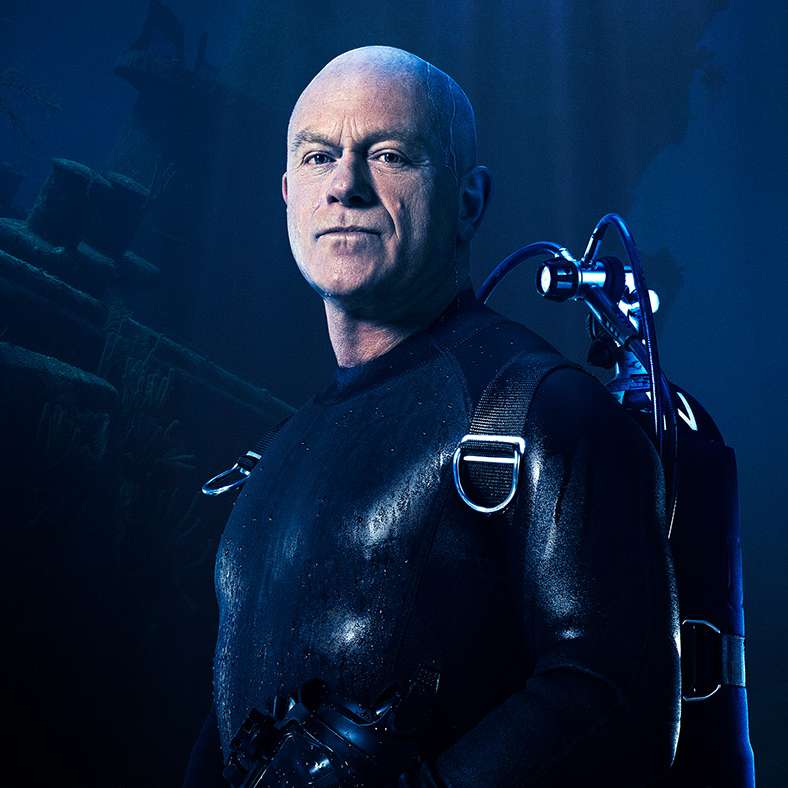
Suffering for your art. I felt sorry for poor Ross as he explored the wrecks of the Red Sea in what looked to be one of the most unpleasant kit configurations of all time. A full face mask, surface comms and a twinset with an additional pony mounted in the centre – it looked like a pig to dive. On the plus side it was the first time the show had given him more than a couple of meters of visibility to play with.
The second series of Ross Kemp’s diving adventures returned to Sky History in April and ratcheted up the jeopardy as he ventured deeper and further in search of deep sea ‘treasure’.
The four part series saw the actor turned documentary maker diving in Plymouth, Normandy, the Egyptian Red Sea and on the Mary Rose (what’s left of it at least). The new series again succeeds in being an excellent introduction into wreck diving and marine archaeology for a mainstream audience. Kemp works well as the everyman foil surrounded by more experienced heads in dive supervisor Neil Brock and marine archaeologist Mallory Haas.
On the face of it exploring the remains of the Mary Rose seemed like an odd decision – the last time I checked it was sat in a museum in Portsmouth. However, the episode covered the history of its discovery and eventual raising in 1982 allowing them to justify looking for remnants that weren’t successfully salvaged. They eventually managed to bring back some rotted timber that the museum curator was keen to investigate further – which seemed like a good result.
The show delivered snippets of genuine drama with Ross and Mallory getting into some trouble with a CO2 hit while trying to recover items from Plymouth Sound. It’s easy to watch and be critical that he doesn’t look particularly comfortable in the water (he’s often using his arms to swim etc) but I think that’s unfair. The health and safety regulations necessitate the aforementioned unwieldy equipment configurations that aren’t fun or easy to dive at the best of times.
Ross and the team ventured to the Red Sea to dive some familiar and well trodden wrecks in the Rosalie Moller, SS Dunraven and SS Thistlegorm. The ‘treasure hunter’ premise was stretched somewhat as attempts were made to set up mysteries to solve on each dive. It’s worth remembering these are some of the most dived wrecks in the world and the chance of any new discoveries basically nil.
I found the dives on the LST 523 in Normandy the most interesting, largely because it was a wreck I’m not familiar with. It feels like Normandy is an area that is under dived, from the UK perspective at least, and the show could have looked to spend more time there.
Overall it’s light on surprises or genuine revelations but I have to be realistic that I and many other divers aren’t the key audience it wants to appeal too. It’s a primetime TV show so it needs to be accessible and requires some drama, whether real of exaggerated. Still, it’s a pleasure to continue following Ross on his diving journey.