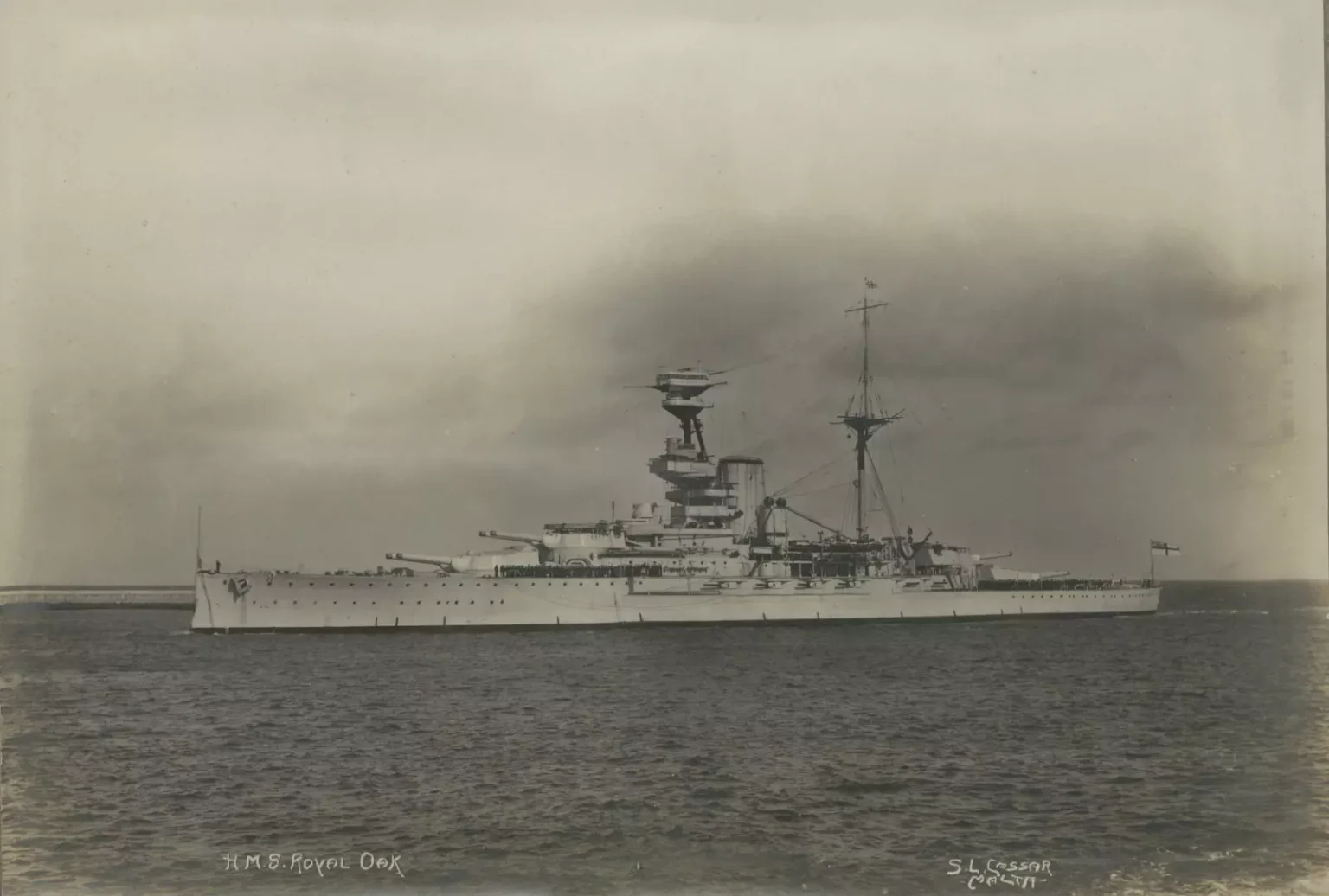
On the night of 14th October 1939 HMS Royal Oak was supposedly in one of the safest places she could be.The battleship was at anchor in the UK’s wartime naval bastion of Scapa Flow. The natural habour was well protected with shore batteries, anti-submarine nets and patrol vessels. The Second World War was underway but not raging: the Phoney War.
Just after midnight an explosion ripped through the bow of the ship severing her anchor chain. This was shortly followed by three further explosions amidships. Taking on water, Royal Oak listed to starboard and, in just over 30 mins from the initial explosion, sank to the bottom of Scapa Flow taking the lives of 835 men and boys.
The Royal Navy would soon find out they had been the victim of a daring U-boat attack. U-47, commanded by Gunther Prien, had expertly navigated around blockships through the narrow channel of Kirk Sound and into Scapa Flow. It was a symbolic blow to the British, and Royal Navy in particular, at this early stage of the war. It also highlighted severe shortcomings in the defences at Scapa.
The wreck of HMS Royal Oak sits in just 33m of water, well within recreational diving limits, and in a popular wreck diving location. However, diving is forbidden as the wreck is listed in the Protection of Military Remains Act 1986 and is a designated Controlled Site. This represents the highest level of protection under the legislation.
In what I plan to be the start of a new series I want to investigate the stories of these protected, unique and un-dived wrecks.
Controlled Site
The Protection of Military Remains Act 1986 is UK legislation that safeguards shipwrecks and downed military aircraft from interference and salvage. It designates wrecks either as: a protected place, where diving is allowed but nothing is to be removed and penetrating into the wreck forbidden or a controlled site, as with the Royal Oak, where all diving is banned.
There are 12 other wrecks that are granted this highest level of protection across the UK. The legislation theoretically applies worldwide but is realistically enforceable only in UK waters. The level of protection a wreck is offered is generally based on the loss of life and likelihood that it could be exploited or disturbed by divers.
HMS Royal Oak
The third ship of the Revenge-class of battleships, Royal Oak was laid down in 1914 at the Devonport Royal Dockyard and commissioned into service during 1916. Her construction came at the zenith of British warship construction prior to the start of the First World War. It took under a year for her to be launched – a tremendous feat of industrial might.
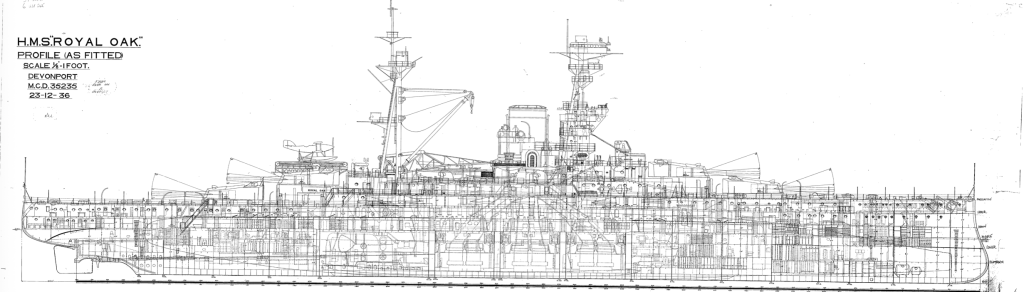
By this time, British battleship design had matured after rapid advancements since the launch of the first all-big-gun battleship, HMS Dreadnought in 1906. She was 30,000 tons, 189m in length and armed with eight 15 inch guns. This would be the rough blueprint for British battleship construction for the next 30 years.
By her commissioning into service the Anglo-German naval arms race had been effectively won by the British. They had comprehensively out-built the competing Imperial German Navy. The Revenge-class were intended to be a more cost-effective option compared to the previous (and wildly expensive) Queen Elizabeth-class. The result was a highly capable ship for her time but one that would suffer in the longer run as this cost cutting gave her a reduced top speed, limiting her effectiveness into the 1930s.
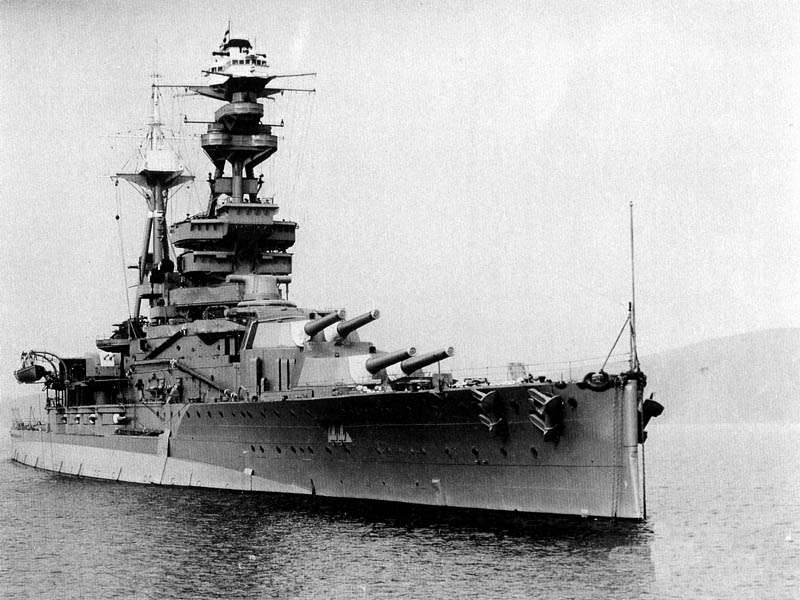
Royal Oak saw limited upgrades before the start of the Second World War with improvements made to her anti-aircraft armament and torpedo defence system. However, due to her slow speed (now under 20 kts) she wasn’t seen as a frontline capital ship.
Sinking
The attack by U-47 was expertly planned and executed – U-boat captain Gunther Prien being handpicked for the mission. The raid took place on a moonless night with a high tide allowing the most favourable conditions to creep into Scapa. It was a daring feat of navigation in the time before the GPS and other electronic navigation aids.
U-47 fired an initial salvo of 3 torpedoes with just one hitting the mark in the bow of Royal Oak. On the second firing run U-47 had more success, landing 3 hits in quick succession amidships. The damage was devastating with Royal Oak listing heavily to starboard and sinking in under 13 minutes from time of the second strike.
Other ships of the Revenge-class would show themselves resilient to torpedo attack throughout the rest of the war. However, as Royal Oak was stationary at anchor it allowed U-47 to deliver an extremely tight spread with 3 torpedoes hitting in close proximity on the starboard side. It would likely have been a fatal blow to any battleship.
Rescue efforts started immediately but only 386 were able to be pulled from the frigid waters.
In total 835 men and boys died in the sinking, of which 134 were under 18 years old – the greatest loss of boy seamen in Royal Navy history. The sinking of Royal Oak would largely end the long standing Royal Navy tradition of sending boys to sea on front line vessels.
The Nazi’s were quick to claim the propaganda victory of the attack and the sinking of Royal Oak. The location of the attack, Scapa Flow, was particularly symbolic for the Germans with its association to the humiliating internment of the its High Seas Fleet at the end of the First World War.
The British moved to remedy the vulnerabilities at Scapa by building the Churchill Barriers. The four solid causeways would block the smaller entrances to Scapa, including Kirk Sound as used by U-47.
The loss of a capital ship, even one approaching obsolescence, was a strategic blow to the British particularly when Germany still retained its heavy surface units. However, the impact could have been worse if a newer, more capable, ship had been sunk.
HMS Royal Oak Wreck
The wreck lies upside down in 33m of water – with the shallowest part of the hull rising to just 12m below the surface. Turning turtle (capsizing while sinking) is a feature of battleship wrecks caused by the huge weight of the guns, turrets and deck armour.
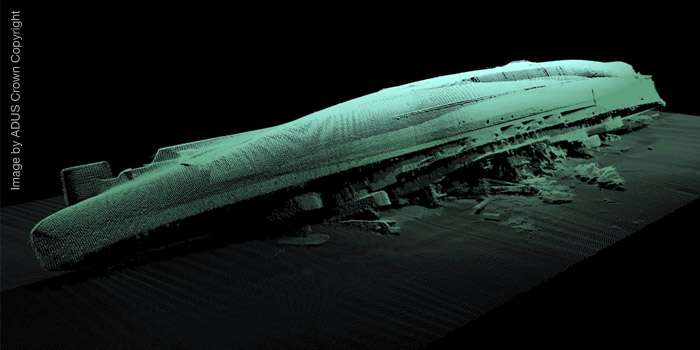
The majority of the dead were never recovered and likely most still remain in the largely intact wreck. The site was initially surveyed in 1950 with the Admiralty inviting tenders for her salvage in 1957. This was unsurprisingly met by fierce resistance from survivors and relatives, with the plan being abandoned the following year.
The wreck started to be dived recreationally in the 1970s but it soon became apparent divers were removing artefacts (some of which were quietly returned). A local diving ban was enforced which was eventually superseded by the Protection of Military Remains Act.
There have been periodic approved surveys of the wreck site over the years with notable expeditions in 2006 and 2018/19. These continue to return new details of the wreck and her current condition. The only regular visitors to the wreck are Royal Navy divers, who ceremonially replace a white ensign at her stern every year.
HMS Royal Oak is likely the best preserved battleship within diving limits. It serves both as a solemn war grave and as an important site for its historic and archaeological value. The UK has been woeful at preserving its naval history of the period with no capital ships being preserved, making the continued custodianship of Royal Oak even more vital.
Further Reading
HMS Royal Oak Survey 80 (2018-2019) – an superb expedition report with great detail on the current condition of the wreck.
Related Posts