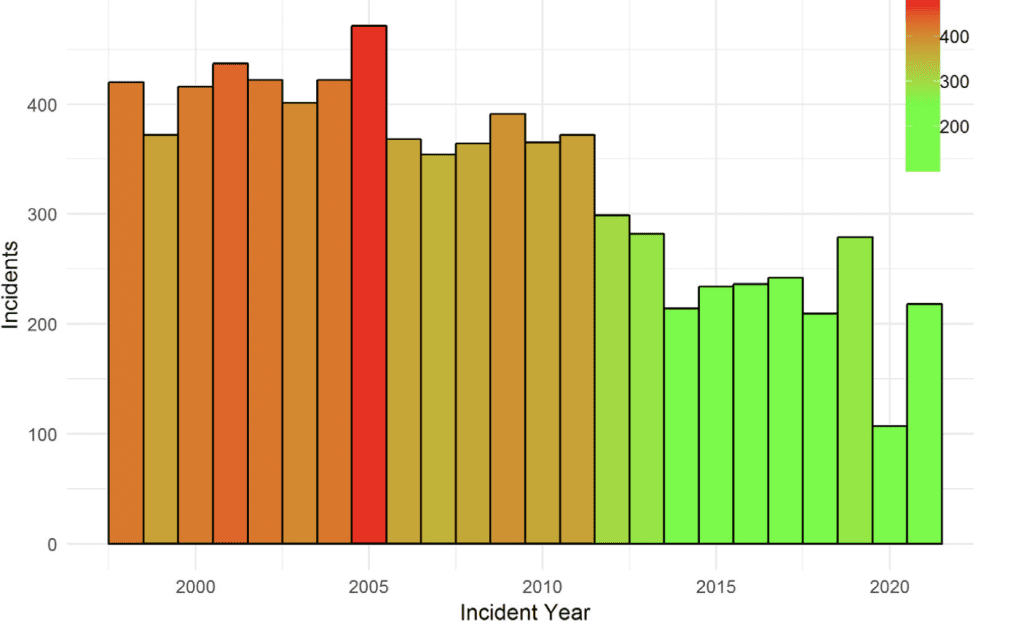
The UK diving season is approaching. It’s the time for preparation: kit to be serviced, boats prepared and trips planned. It’s also an ideal opportunity to read, consider and digest the BSAC Annual Diving Incident Report for 2021. The report, released toward the end of 2022, provides statistical analysis and narratives of reported diving incidents. It’s an excellent resource to learn from the unfortunate experiences of others.
The overall figures for incidents, apparent causes and fatalities appear to roughly match the trend from previous years. It presents some interesting conclusions in the executive summary: that there may have been a rise in equipment related incidents, blaming the extended diving hiatus of the pandemic, and that separation and solo diving continue to feature prominently in the reported fatalities.
The authors acknowledge that it’s challenging to objectively categorise incidents: there are normally multiple interrelated causes. This is especially true when determining the sequence of events leading to a fatality. The cause of death ‘by drowning’ doesn’t give any insight to learn from the incident but is often the only information available.
25% of fatalities were attributed to natural causes. The report is nuanced enough to conclude natural causes as a factor rather than a direct cause. I’ve always had suspicion that the mainstream reporting of incidents as ‘died of natural causes’ largely seemed to gloss over the events leading up to that point.
The statistics and trends are useful but really provide the most benefit to those designing, assessing and delivering training by possibly highlighting gaps, shortfalls and inadequacies. The final 30 pages of the report provide the most benefit to your average diver by collating the narratives (where available) of incidents.
These range in length from a single line to more detailed descriptions of events and circumstances. They provide excellent scenarios to think through and visualise. What would you have done differently? Safety learning and learning from experience are a fundamental part of safety critical activities like aviation and can easily be applied to the dive club setting.
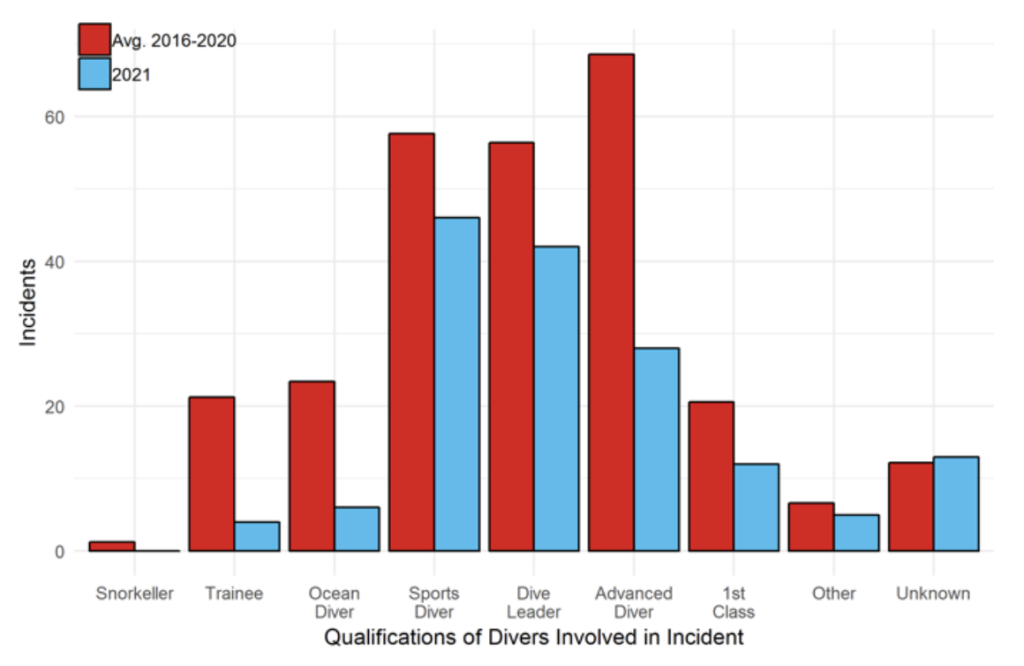
Fundamentally, it serves as a reminder that scuba diving is not without risk: particularly when training guidelines are not followed it’s inherently dangerous. This applies to both the experienced and beginner. Complacency is a real risk. This may be borne out in the statistics, albeit not in this year’s figures, because BSAC Advanced Divers were the most likely to be involved in an incident over the last 5 years. The Advanced Diver qualification doesn’t have a direct equivalent in most other training agencies but is seen as above a PADI Divemaster. So experienced divers would be expected to make a far smaller percentage of the overall diving population.
The report demonstrates the value of the BSAC as the UK’s governing body. The lack of commercial interests that may make training agencies reluctant to share this type of information doesn’t apply to the BSAC and its club based structure. Overall the report is not a fun or glamorous subject to dive into but if reading it can prevent an accident it’s worthwhile.